The Short Answer
Every number in a CIWQE water quality report comes from a report your water utility published itself. We don't estimate, model or fill in blanks. When a value isn't published, we tell you it isn't there.
Our Primary Source: Your Utility's Annual Report
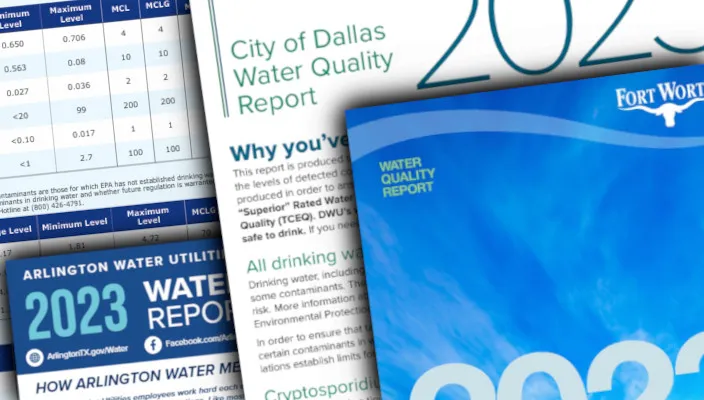
Municipal drinking water systems in Canada test their water continuously and report the results. In Ontario, for example, owners of municipal residential drinking water systems must prepare an annual report on their system under the province's drinking water regulations and make it available to the public.
For each area we cover, we read the utility's most recent annual report and record the figures for the contaminants that matter most to households. For 2025, these include:
| Area | Utility report used |
|---|---|
| Toronto | City of Toronto Drinking Water Analysis Summary 2025 |
| Mississauga & Brampton | Region of Peel 2025 Water Quality Report, South Peel |
| York Region | York Region 2025 Annual Drinking Water System Quality Report |
| Aurora & Newmarket | York Region 2025 Annual Report, Newmarket system |
| Pickering, Ajax, Whitby & Oshawa | Region of Durham 2025 Annual Report, Ajax system |
| Hamilton | City of Hamilton 2025 Annual Water Quality Report |
| Ottawa | City of Ottawa 2025 Drinking Water Quality, Britannia plant |
| Barrie | City of Barrie 2025 Drinking Water System Annual Report |
| St. Catharines | Niagara Region 2025 Annual Report, DeCew Falls plant |
| Kitchener, Waterloo & Cambridge | Region of Waterloo 2025 Annual Water Quality Report |
| Guelph | City of Guelph 2025 Water Services Annual Report |
| London | City of London 2025 Drinking Water Summary Report |
Each report page on our site links directly to the original document, so you can check our figures against the source.
Our Benchmark: Health Canada's Guidelines
We compare every result against the Guidelines for Canadian Drinking Water Quality, developed by Health Canada with the provinces and territories. We always tell you which kind of value we're comparing against:
- MAC (Maximum Acceptable Concentration): a health-based limit.
- AO (Aesthetic Objective): a limit for taste, odour or colour, not health.
- Objective: a newer type of value, such as the 2024 objective of 30 ng/L for the sum of 25 PFAS.
Our guide to Health Canada's drinking water guidelines explains each one in detail.
How We Handle the Numbers
- Ranges stay ranges. If a utility reports a low-to-high range across its sampling points, we show the full range rather than picking one number.
- "ND" means not detected. It means the result was below what the lab method can measure, which is not the same as zero.
- Missing means missing. If a utility didn't report a parameter, our report shows it as not reported. We never substitute a national average.
- Lead is treated differently. Lead usually enters water from service lines and household plumbing, after treatment. A plant-level result can't tell you what's at your tap, so we explain your lead risk and point you to an accredited lab for a tap test.
What We Never Do
- We never generate or "predict" contaminant levels.
- We never mark a result "above guideline" unless the published figure is above the guideline.
- We never change a utility's figures to make a point.
Limitations You Should Know
A utility report describes water leaving the treatment plant and moving through the system, usually averaged over a year. It does not describe:
- the plumbing inside your building,
- short-term events such as main breaks or boil-water advisories, or
- private wells, which are not covered by municipal reports at all.
If your postal code isn't covered yet, our report says so and points you to testing options. We add new areas and refresh existing ones as utilities publish new annual reports.
Spotted a Problem?
If a figure on our site doesn't match your utility's report, please tell us. We check every report against its source and correct errors openly, as described in our editorial standards.
Educational Content Notice
This article is provided for general educational purposes only. The Canadian Institute for Water Quality Education does not endorse specific commercial products or services. Always consult a certified water professional for advice specific to your situation.