The Source of Lead in Tap Water
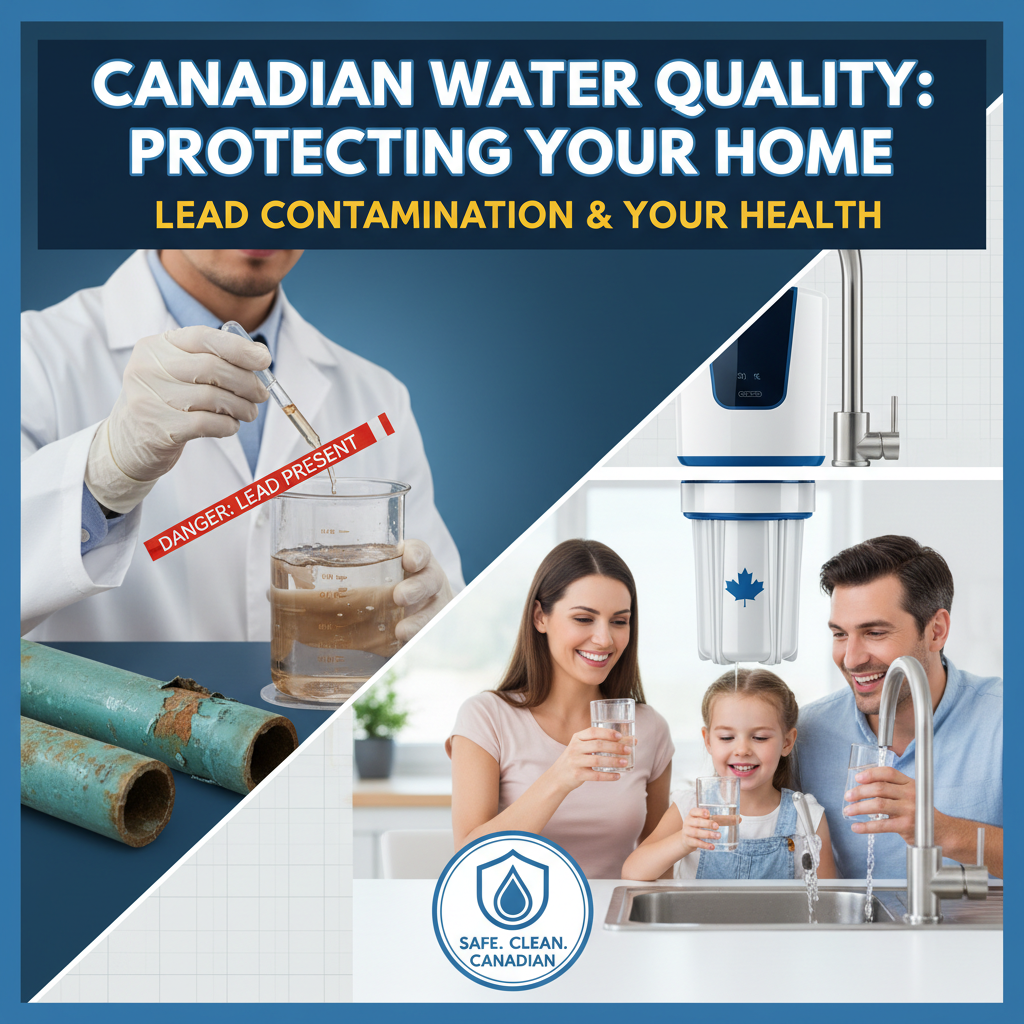
Lead rarely occurs naturally in source water. The problem lies in plumbing infrastructure. Lead enters drinking water primarily through:
- Lead service lines: The pipe connecting the municipal main to your home. Many Canadian cities (including Montreal, Winnipeg, and parts of Toronto) still have significant numbers of lead service lines in older neighbourhoods.
- Lead solder: Copper pipes in homes built before 1990 were often joined with lead-tin solder.
- Brass fittings and fixtures: Many faucets and valves contain brass alloys with lead content, even in relatively new homes.
Health Canada's Position
Health Canada reduced the Maximum Acceptable Concentration (MAC) for lead in drinking water to 5 µg/L in 2019, down from the previous guideline of 10 µg/L. However, the organization acknowledges that no level of lead exposure is considered safe, particularly for children and pregnant women.
Who Is Most at Risk?
- Children under 6 years old
- Pregnant and breastfeeding women
- Residents in homes built before 1990
- Homes with lead service lines (check with your municipality)
Immediate Steps You Can Take
Short-Term
- Flush your cold tap for 1–2 minutes before using water for drinking or cooking, especially after the tap has been unused for several hours.
- Use only cold water for drinking, cooking, and especially for making infant formula. Hot water dissolves lead more quickly.
Long-Term
- Get your water tested by a certified laboratory. Flush the tap first, then collect a "first draw" sample (without flushing) for a proper lead exposure assessment.
- Install a certified filter: NSF/ANSI 53 or NSF/ANSI 58 certified filters are effective at removing lead.
- Replace your service line: If your municipality offers a partial or full lead service line replacement program, participate.
The Bottom Line
Don't assume your water is lead-free simply because it comes from a municipal system. Testing is the only way to know for certain. If you have children at home, act now.
Educational Content Notice
This article is provided for general educational purposes only. The Canadian Institute for Water Quality Education does not endorse specific commercial products or services. Always consult a certified water professional for advice specific to your situation.